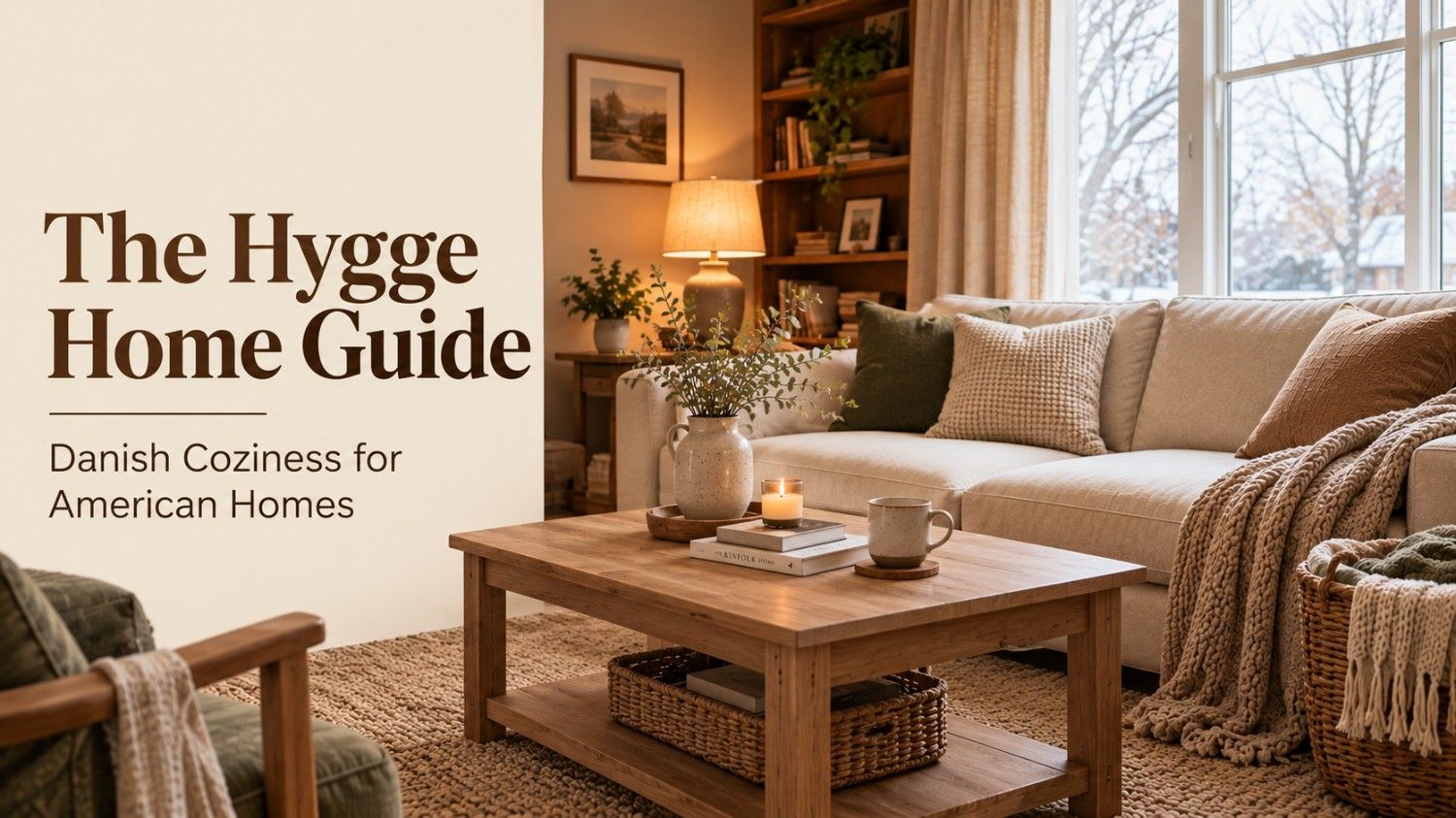
You can have a comfortable sofa, attractive furniture, and a room full of carefully chosen decorations and still feel like something is missing. Sometimes a home looks good but doesn't quite feel like a place where you can exhale at the end of a long day.
That's where hygge comes in. Often associated with Danish living, hygge is about creating a feeling of comfort, ease, and connection in everyday life. It can include warm lighting and soft blankets, but it also means enjoying a quiet evening, sharing a simple meal, or making time for people you love.
The good news is that you don't need a Scandinavian-style house, expensive furniture, or a complete makeover to bring hygge into an American home. A few thoughtful changes can make your existing space feel more welcoming, personal, and comfortable.
What Does Hygge Mean in Home Decor?
Hygge is a Danish word commonly associated with coziness and well-being. In a home, it describes the feeling created when your surroundings make it easy to relax, enjoy ordinary moments, and feel comfortable on your own or with others.
Hygge isn't a strict decorating style with a fixed color palette or a shopping list. A bright apartment, a traditional family home, and a small rental can all feel hygge in different ways. The goal is not to copy a photograph of a perfect Scandinavian living room. It's to make your actual home more enjoyable to live in.
Think of it as a combination of three things: a comfortable environment, a calmer atmosphere, and room for meaningful everyday moments.
1. Use Warm, Layered Lighting
Lighting is one of the easiest ways to change how a room feels, especially after sunset. A single bright overhead fixture can make a space feel functional but not particularly relaxing. Softer light from a few different places creates a more inviting atmosphere.
Try placing a table lamp beside the sofa, a floor lamp near a favorite chair, or a small lamp on a bedroom dresser. Choose warm-toned bulbs for areas where you unwind, and keep brighter task lighting where you need to read, cook, or work.
You don't need to replace every fixture. Start with one corner you use in the evening and see whether a lamp makes it more comfortable. For more detailed advice on light placement and bulb color, read our guide to making a home feel cozier with lighting.
Budget-friendly idea: Move a lamp you already own into the room where you spend the most time. Sometimes changing its position is enough to make a corner feel more welcoming.
2. Layer Textures Instead of Buying Matching Decor
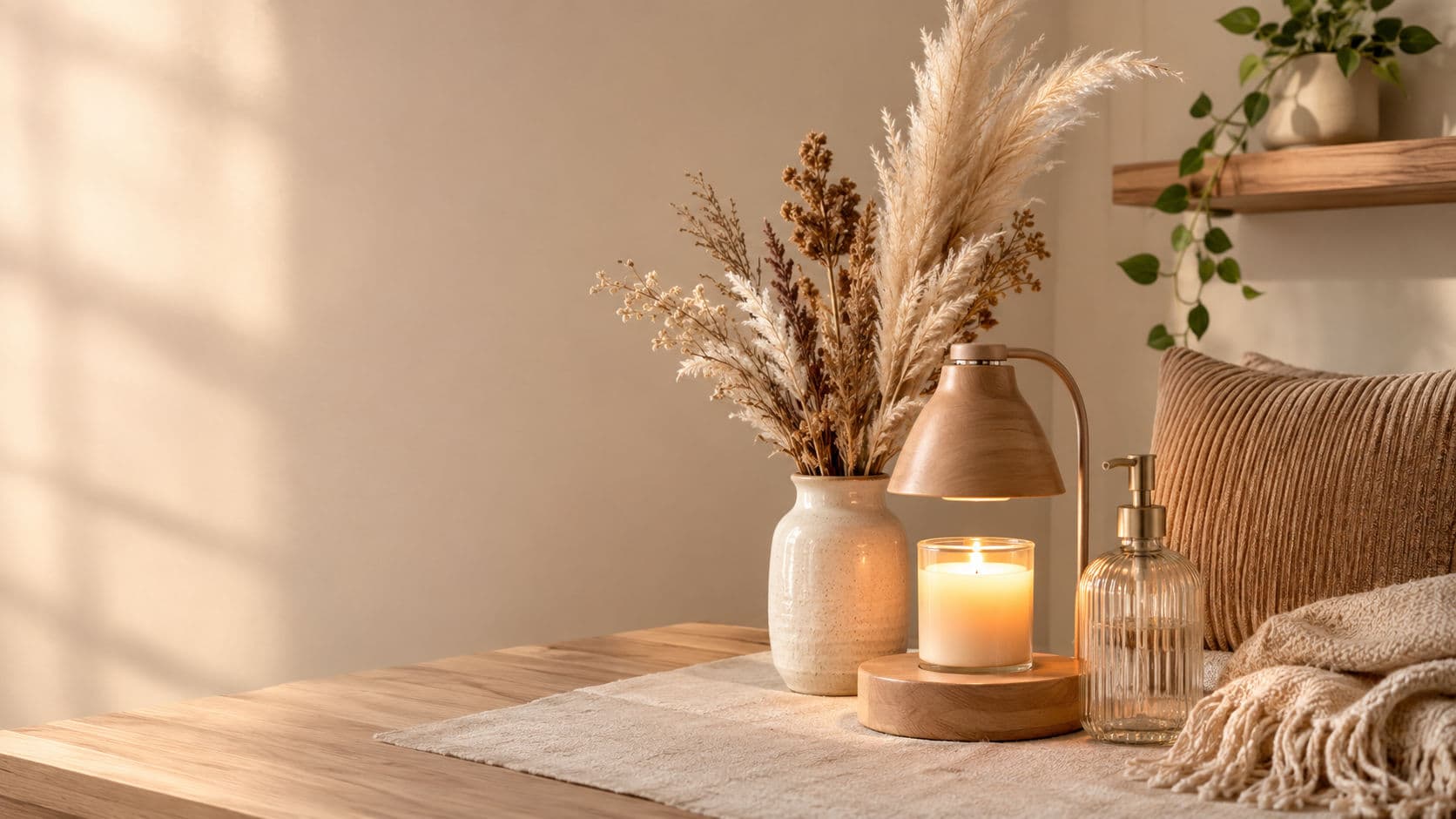
A hygge-inspired room often feels inviting because it combines different tactile materials. Think cotton, linen, wool-like knits, wood, ceramic, and woven fibers. The contrast between these surfaces gives a room depth without requiring bold patterns or lots of accessories.
Start with what you already have. Fold a soft throw over one end of the sofa, add a textured cushion to a plain chair, or place a woven basket beside a reading spot. In the bedroom, a quilt or an extra blanket at the foot of the bed can add warmth without changing the entire room.
Keep the combination practical. If you have pets, children, or a busy household, choose washable covers and fabrics that suit everyday use. A home should feel comfortable to live in, not so delicate that you worry about touching anything.
Budget-friendly idea: Change cushion covers or rearrange existing blankets before buying new ones. One or two contrasting textures can be more effective than a pile of decorative items.
3. Choose a Calm Color Palette With a Little Warmth
Soft neutrals can help create a relaxed background, but a hygge home doesn't have to be entirely beige or white. Warm cream, muted gray, gentle brown, natural wood, dusty green, and subdued blue can all work, depending on the room and the colors you already own.
Instead of trying to make every object match, look for a few colors that appear naturally throughout the space. A wood coffee table might connect to a wooden picture frame, while a muted green cushion might pick up the color of a plant or artwork.
Keep the palette flexible. If your sofa is dark blue or your rental has cool gray walls, you don't need to replace them. Introduce warmth through lighting, softer fabrics, natural materials, and a few complementary accessories.
Budget-friendly idea: Shop your own home first. Move a cushion, framed print, ceramic vase, or blanket from another room to see whether it works better in your main living area.
4. Make One Small Corner Your Place to Unwind
You don't need an entire room dedicated to relaxation. A single comfortable corner can give you a place to read, listen to music, drink your morning coffee, or take a short break from screens.
Begin with a seat you already enjoy. Add a nearby surface for a drink or book, suitable lighting, and one soft textile. If space is limited, a supportive chair beside a window or the end of a sofa can work just as well as a dedicated nook.
Keep the essentials within reach without filling every available surface. A small tray, a basket for reading material, or a hook for a blanket can make the area easier to use.
If you'd like to create a dedicated reading space, our guide on creating a cozy reading corner, even in a small room offers a more focused starting point.
5. Let Natural Materials and Everyday Objects Add Character
Hygge-inspired spaces often feel personal rather than showroom-perfect. Wood, ceramic, paper, plants, and woven materials can bring a gentle connection to the natural world. They also help balance smooth surfaces such as glass, metal, or polished furniture.
You can introduce natural details with a wooden serving board, a ceramic mug displayed on an open shelf, a simple vase with seasonal branches, or a basket that keeps everyday items organized. The object doesn't need to be expensive or decorative for its own sake; it should make the room feel more useful or more like you.
Use greenery if you enjoy caring for plants, but don't treat live plants as a requirement. A branch, dried arrangement, or favorite natural-material object can provide a similar visual softness without adding another responsibility.
Budget-friendly idea: Display a few objects you already use and enjoy instead of buying a collection of accessories solely for styling.
6. Keep Clutter Manageable, Not Your Home Empty
A calm room doesn't have to be minimalist. Books, family photographs, hobby supplies, children's toys, and meaningful souvenirs can all belong in a comfortable home. The challenge is giving everyday things a place so they don't constantly compete for your attention.
Start with the surfaces you use most. Clear enough space on the coffee table for a drink, leave the bedside table functional, and keep the kitchen counter usable for preparing food. Use baskets, drawers, trays, or closed storage for items that need to remain nearby but don't need to be visible all the time.
Rather than decluttering your entire home in one weekend, choose one small area and make it easier to maintain. A five-minute reset at the end of the day can help return frequently used objects to their places.
The aim is not to remove every sign of daily life. It's to make room for the activities and people that matter to you.
7. Create Simple Rituals That Make Home Feel Special
Decor can support a hygge atmosphere, but the feeling doesn't come from objects alone. Ordinary routines can make your home feel more welcoming without costing anything.
- Make evenings softer: Turn on a lamp, put away work materials, and choose music that suits your mood.
- Make a small drink ritual: Use a favorite mug for tea, coffee, or hot chocolate and take a few minutes to enjoy it without multitasking.
- Share an uncomplicated meal: Invite someone over for soup, sandwiches, or whatever you already planned to cook. Hospitality doesn't need to be elaborate.
- Protect a little quiet time: Read, draw, stretch, or sit comfortably without feeling that every minute needs to be productive.
- Make everyday objects easy to enjoy: Keep a book beside your chair, a blanket near the sofa, or board games within reach for a relaxed evening.
These habits are personal, not rules. Choose the ones that fit your schedule and household. Hygge should make everyday life feel easier, not become another routine you feel pressured to perform perfectly.
8. Make Hygge Work in Every Room
Living room
Focus on comfortable seating, a soft throw, warm evening lighting, and a layout that makes conversation easy. Leave enough room to walk around furniture and use the space without constantly rearranging things.
Bedroom
Keep the bedside area useful, choose bedding that feels comfortable to you, and use gentle lighting in the evening. A clear path to the bed and a place for everyday items can make the room feel more restful without a full makeover.
Kitchen and dining area
Make the space practical and welcoming. Clear a workable area for preparing food, keep favorite mugs or everyday dishes easy to reach, and use a small vase or simple centerpiece if it doesn't get in the way. A comfortable meal shared with others can be just as important as the room's appearance.
Small apartments and rentals
Work with the space you have. Use portable lamps, removable decor where appropriate, baskets, and textiles to create warmth without permanent changes. Choose furniture and accessories that serve a purpose, and avoid filling limited floor space with objects you don't use.
9. Avoid These Common Hygge Decorating Mistakes
- Buying everything at once: A room can become crowded when you try to recreate an inspiration photo item by item. Make small changes and live with them before adding more.
- Confusing cozy with cluttered: Soft textures and meaningful objects are useful, but every surface doesn't need to be covered.
- Using only one type of lighting: A room used for relaxing may benefit from a mix of general and local lighting, rather than relying entirely on one bright ceiling fixture.
- Copying someone else's palette exactly: Your existing floors, furniture, rental finishes, and personal preferences should guide your choices.
- Turning hygge into a shopping list: You can create a welcoming atmosphere with items you already own and time spent enjoying your home.
If you're exploring the broader differences between Scandinavian-inspired looks and other decorating approaches, our practical guide to home decor styles can help you choose a direction that suits your space.
A Simple Hygge Home Checklist
Use this quick checklist to make a few meaningful changes without turning the process into a major project:
- Choose one area where you most want to feel comfortable.
- Try a warm lamp or adjust the lighting you already have.
- Add one soft or natural texture using something you own.
- Clear a useful surface or create a simple storage spot.
- Keep a favorite book, mug, blanket, or hobby item within reach.
- Plan one relaxed moment alone or with someone you care about.
- Wait before buying anything else and notice what actually improves daily life.
Frequently Asked Questions
What does hygge mean in home decor?
Hygge is a Danish concept associated with coziness, comfort, and enjoying everyday moments. In home decor, it can mean comfortable seating, warm lighting, soft textures, natural materials, and a welcoming atmosphere that supports relaxation and connection.
How can I make my home feel hygge on a budget?
Start by rearranging what you already own. Move a lamp, layer a blanket, clear a useful surface, display a favorite mug or book, and make one corner more comfortable. You don't need to buy a matching furniture set or redecorate the whole room.
Does a hygge home have to be minimalist?
No. A hygge home can be simple or full of personal belongings. The important thing is that the space feels comfortable and usable to the people who live there. Thoughtful storage can help keep everyday items accessible without letting clutter take over.
Can I create hygge in a small apartment?
Absolutely. Focus on a few high-impact details, such as a comfortable seat, warm lighting, a soft textile, and a simple way to store everyday items. Portable lamps and accessories can work especially well in rentals where permanent changes aren't practical.
Is hygge the same as Scandinavian interior design?
Not exactly. Scandinavian design describes a broad design tradition, while hygge is more about the experience of comfort, ease, and togetherness. The two can complement each other, but a home doesn't need a particular Scandinavian look to feel hygge.
Make Your Home a Place You Enjoy Being
A hygge-inspired home isn't defined by how many candles, blankets, or neutral accessories it contains. It's defined by how comfortably you can live in it. Warm lighting, practical storage, natural textures, and a place to pause can all help, but none of them needs to be expensive or perfect.
Start with one room, one corner, or one small habit. Use what you already have, add only what genuinely improves your space, and leave room for the ordinary moments that make a home feel like yours.
That's the heart of hygge: not creating a home that looks perfect in a photograph, but one that feels good to return to.