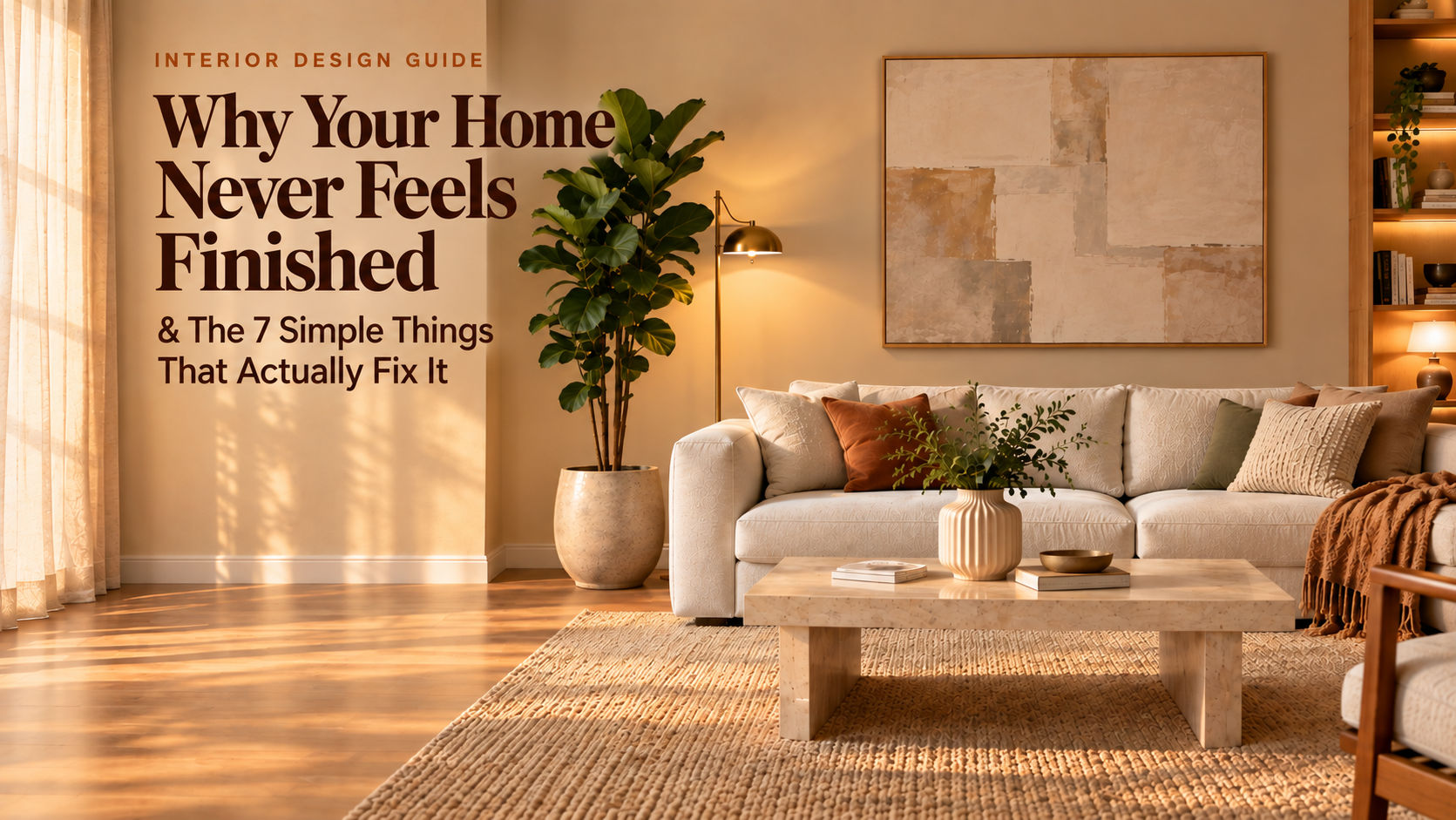
You've bought the furniture. You've hung some art. There are pillows on the couch and a rug on the floor and it still doesn't feel finished. Not bad, exactly. Just... almost there.
The instinct is usually to add more: another accent piece, a bigger plant, one more throw pillow. But most unfinished-feeling homes don't have too little in them. They're missing a handful of specific, fixable design details not more stuff.
Here are the seven subtle things that actually make a decorated room feel complete.
1. There's No Focal Point in the Room
When every wall gets roughly equal attention a small framed print here, a plant there, a mirror over there, with nothing that pulls focus a room has nowhere for the eye to land. It ends up feeling visually scattered instead of composed, even if every individual piece looks great on its own.
The Fix: Pick one wall or architectural feature per room to be the undisputed "main event" an oversized piece of art, the headboard wall in a bedroom, or an intentionally styled fireplace mantle. Let everything else in the space play a supporting role rather than competing for attention.
2. Everything Sits at the Same Height
A room where every object lamps, artwork, side tables, sofa backs, and plants tops out at roughly the same 3 to 4-foot height reads as visual monotone. Your eyes need vertical movement across the room to register a space as intentionally "designed" rather than just filled with furniture.
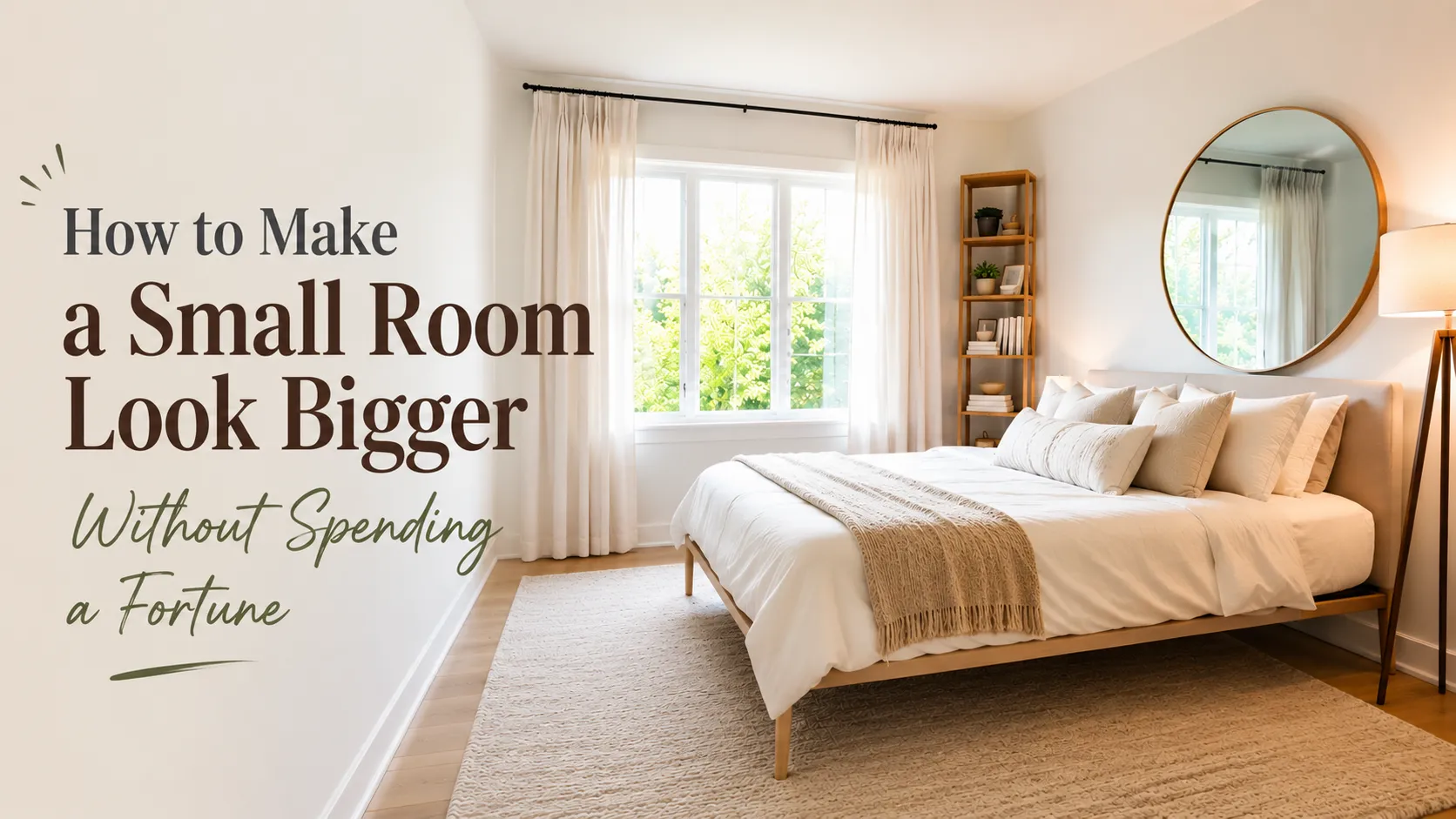
The Fix: Introduce deliberate height variation. Pair a tall floor lamp or an arched light next to a low side table. Hang curtains right beneath the ceiling line rather than right above the window frame, or place a tall sculptural vase on a low console. Creating contrast between low, mid, and high elements instantly opens up the space. (If you're dealing with tight square footage, we break this down further in our guide to making a small room look bigger without spending a fortune).
3. You're Still Living With "Placeholder" Pieces
That area rug you bought quickly just to cover bare floors. The bedside lamp that was "just for now." A piece of art inherited or kept out of habit that you don't actually love. These items don't look broken or terrible, but your brain quietly clocks that they weren't chosen with purpose and that subtle disconnect keeps the whole room feeling unresolved.
The Fix: Make a ruthless, honest inventory of your main living spaces. List anything you'd describe as "temporary" or "we'll deal with it later." Instead of buying new decorative accents, prioritize replacing those 1 or 2 placeholder pieces with intentional items you genuinely love. One piece chosen with real intent does more heavy lifting than five impulse buys.
4. One Overhead Light Is Doing All the Work
This is easily the single most common reason a room feels cold, flat, and incomplete. A single central ceiling fixture floods the space with harsh, uniform illumination. It flattens all architectural shadows, kills depth, and makes even high-end furniture look washed out.
Finished rooms are almost always lit like a stage: with multiple light sources distributed at different heights and warmer color temperatures (between 2700K and 3000K).
The Fix: Turn off the big overhead light and introduce the rule of three: one ambient light source, one task light (like a reading lamp), and one soft accent light (such as a cordless table lamp, candle warmer, or warm wall sconce). We dive deep into fixture placement, Kelvin color temperatures, and cozy layering in The Lighting Guide: Why Your Home Never Feels Cozy (And How to Fix It).
5. Wall and Shelf Space Is Left Blank at Eye Level
Negative space is healthy in interior design, but blank walls right at eye level (where your gaze lands naturally as you enter a room) immediately signal "work in progress." The same applies to floating shelves that are stuffed with books shoved flat, without breathing room or sculptural styling.
The Fix: Stand at the doorway of your room and notice where your natural sightline lands. If you're staring at a wide expanse of blank drywall or a chaotic shelf, that is your primary target. Hang art so that the center of the piece sits approximately 57 to 60 inches from the floor (gallery standard). On open shelves, alternate vertical book stacks with horizontal stacks topped with a ceramic vessel, small brass object, or trailing greenery.
6. Everything Shares the Exact Same Texture
A room decorated in smooth, matching finishes all polished wood, flat cotton cushions, and smooth leather can look neat in catalog photos, yet feel sterile and unfinished in real life. Texture is what gives a neutral room its warmth and tactile richness.
Without contrasting materials, even the most expensive, coordinated color palette feels flat.
The Fix: Aim for at least three distinct textures in any seating area. If your sofa is smooth linen, introduce a chunky waffle-knit throw, a raw travertine coaster set, woven rattan baskets, or ribbed velvet pillow covers. Contrast is what tricks the senses into feeling wrapped in comfort. We rounded up several budget-friendly texture upgrades in our list of 5 Essential Economy Home Decor Finds on Amazon to Achieve a Minimalist Look.
7. You've Never Actually Edited the Room
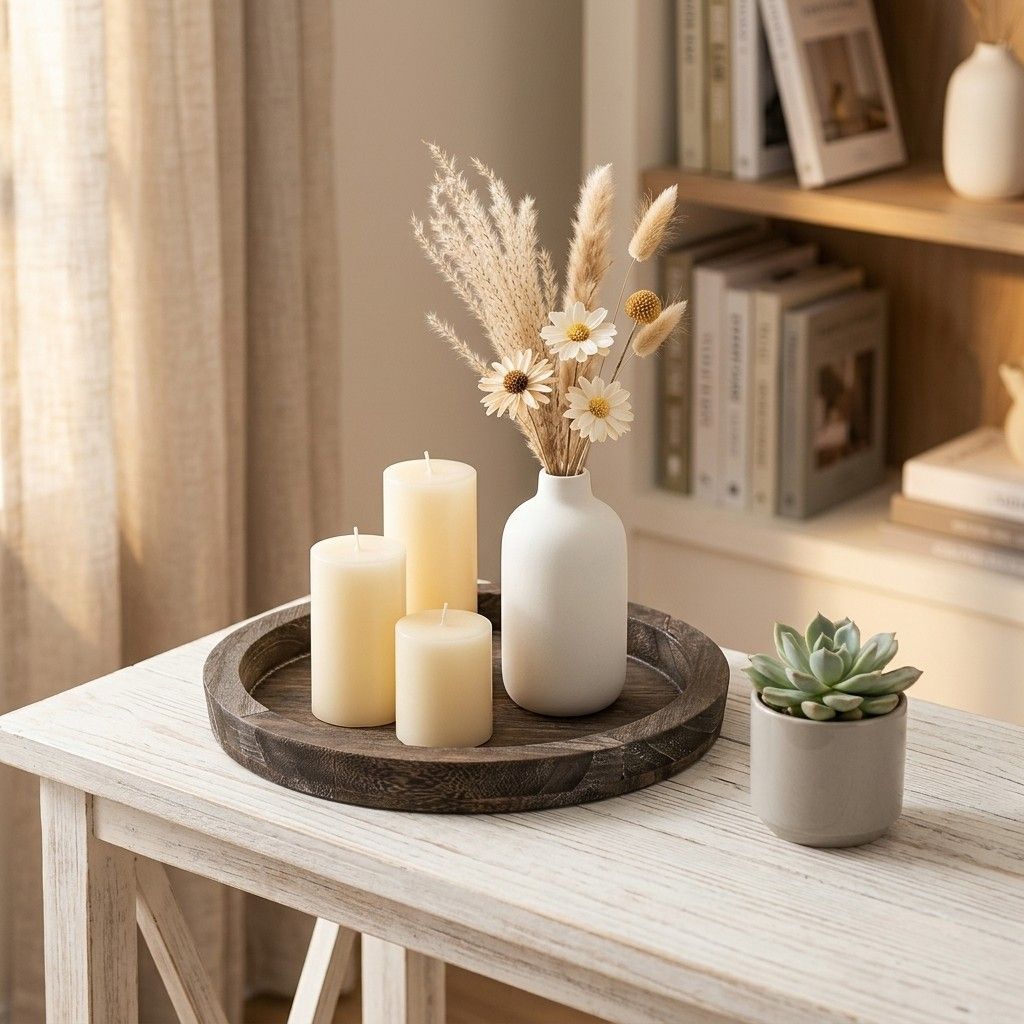
Most unfinished-feeling rooms aren't under-decorated; they are over-decorated with things that were never curated down. When every flat surface coffee table, mantle, credenza, side table holds three knick-knacks, none of them get the space to stand out. The room feels simultaneously busy and unsatisfied.
The Fix: Practice the interior designer's "take one thing away" rule. Clear off your main surfaces completely, and only put back the items that either serve an everyday purpose or bring genuine beauty to the room. Give objects negative space to breathe. Subtraction almost always makes a space look high-end faster than buying more decor ever could.
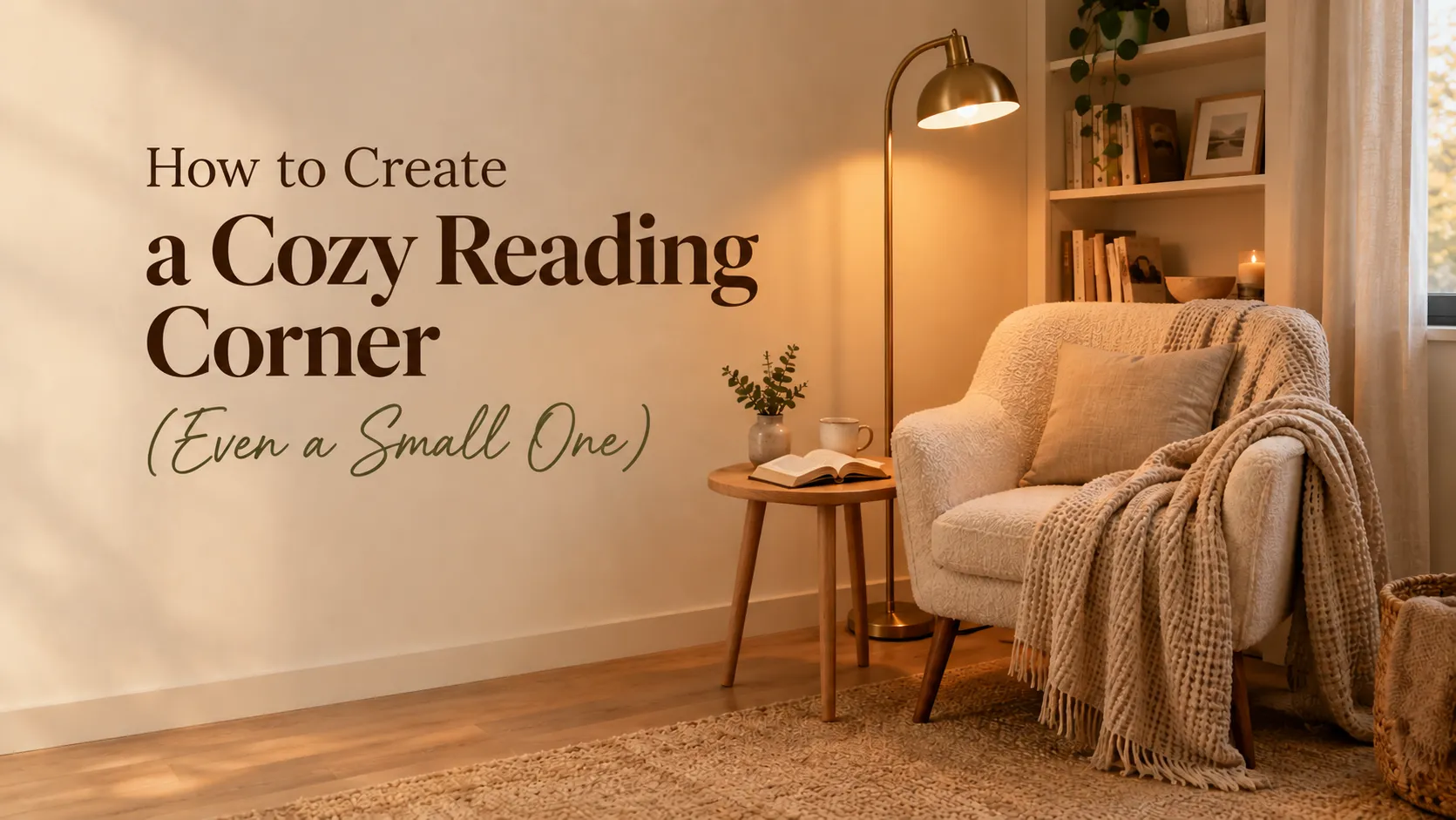
If you want to see this principle applied step-by-step to a quiet corner, our guide on how to create a cozy reading corner in any room demonstrates how just four intentional pieces create an inviting, finished atmosphere.
Quick Checklist: The 7 Finishing Touches at a Glance
- Focal Point: Does one wall draw your gaze first?
- Height Variety: Are elements varying between floor, eye-level, and ceiling?
- No Temporary Pieces: Have you swapped the "just for now" items?
- Layered Lighting: Are at least 2–3 warm lamps used instead of overhead lights?
- Eye-Level Art: Is artwork centered at standard 57–60" height?
- Rich Textures: Does the space mix woven, wood, ceramic, and soft textiles?
- Edited Surfaces: Have you cleared away the visual clutter?
Frequently Asked Questions
Why does my house look decorated but not feel finished?
Usually because the finishing layers are missing specifically a clear focal point, height variation, layered warm lighting, or textural contrast. Simply buying more accessories without addressing these structural design layers usually adds clutter rather than completion.
Is making a room feel finished expensive?
Not at all. The highest-impact changes turning off the harsh ceiling light in favor of table lamps, editing down surface clutter, and rehanging artwork at eye level cost virtually nothing. It's about intentional placement, not total spend.
What is the fastest way to make a room feel complete today?
Fixing the lighting has the most immediate transformation. Switching on two warm-toned lamps (2700K) in opposite corners and turning off the overhead fixture instantly creates depth, shadows, and a welcoming ambiance in under two minutes.

.jpeg&w=3840&q=75)