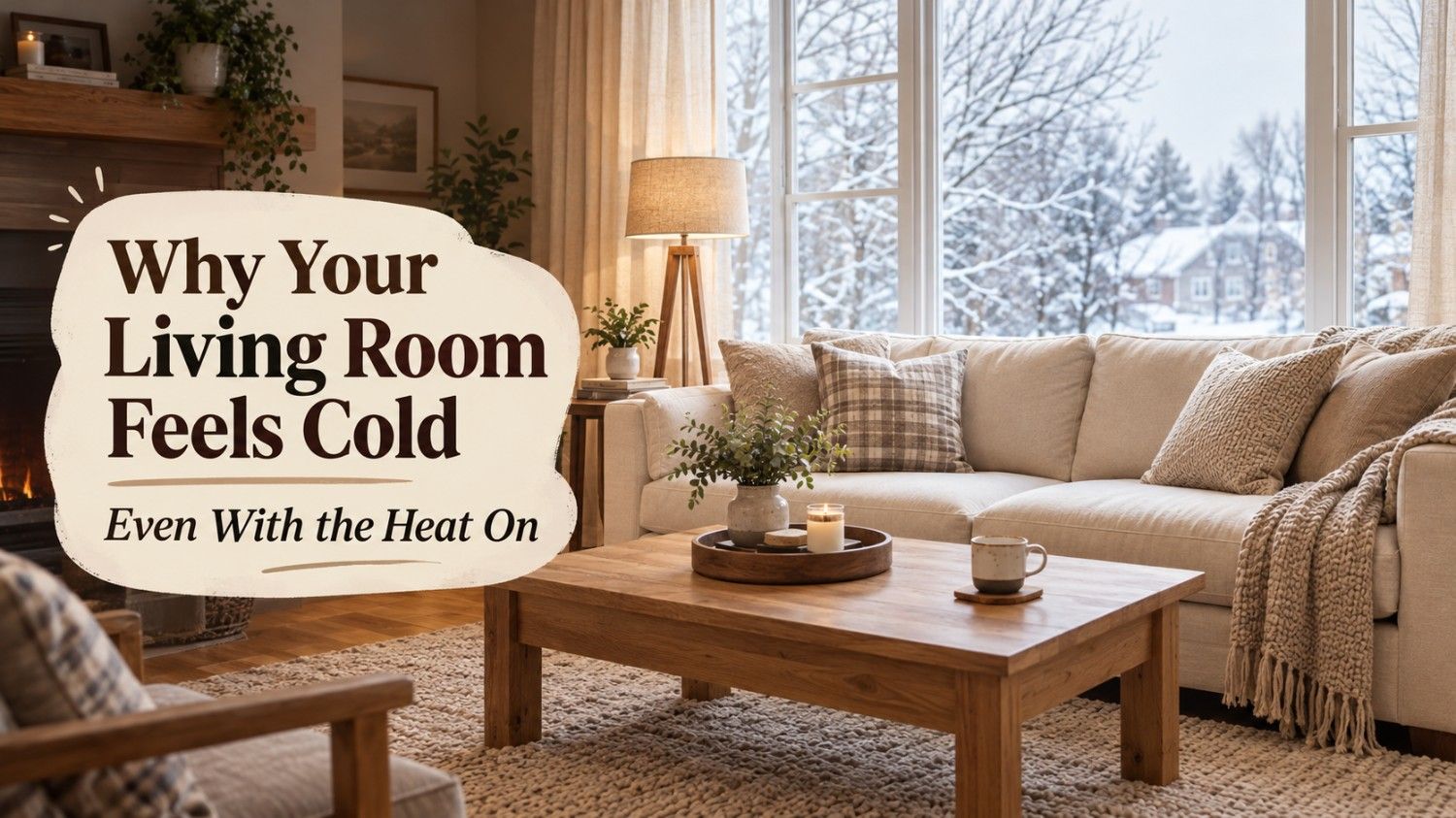
You turn up the thermostat, wait for the heater to run, and expect your living room to feel comfortable. But when you settle onto the sofa, your feet are still cold, the area near the windows feels chilly, and the room never quite reaches the warmth you expected.
Before you buy a bigger heater or replace your furniture, it helps to figure out what's actually making the room uncomfortable. Sometimes warm air is escaping through gaps. Other times, cold windows, blocked vents, or poor heat distribution are the problem.
The good news is that you can start with a few simple checks before spending money on anything. Here's how to identify the likely cause and make your living room feel warmer without automatically turning up the thermostat.
1. Check for Drafts Around Windows and Doors
A living room can lose comfort through small gaps around window frames, exterior doors, and other openings. Even when your heating system is working, cold outdoor air entering the room can make a seating area feel uncomfortable.
Pay attention to where you notice the chill. If it gets worse near a window, the bottom of an exterior door, or a particular corner, start there. On a cold day, carefully feel around the edges of closed windows and doors for moving air. A lightweight strip of tissue can also help you notice an air current without using a flame.
What to do about it
- For movable window and door joints: Consider suitable weatherstripping if you identify an actual gap.
- For a draft beneath an exterior door: A door sweep or removable draft stopper may help, depending on the gap.
- For fixed gaps around trim: Appropriate caulk may be useful for homeowners, while renters should check with their landlord before making permanent changes.
Don't seal moving window parts shut or cover up signs of moisture. If you can't identify the source of a draft, an energy assessment may reveal air leaks that aren't obvious from inside the room.
2. Pay Attention to Cold Windows and Exterior Walls
Not every cold feeling comes from air leaking into the room. A window can have a cold interior surface even when it is closed properly. When you sit close to that glass, your body loses heat toward the colder surface, which can make the area feel chilly even if the thermostat shows a comfortable temperature.
This is especially noticeable when your sofa sits beside a large window or against an exterior wall. The center of the room may feel fine while your usual seat remains uncomfortable.
What to do about it
- Move the sofa or favorite chair a little farther from a noticeably cold window or exterior wall.
- Close lined or heavier curtains in the evening when outdoor temperatures drop.
- Consider removable window insulation film if it is suitable for your windows and rental agreement.
- Keep curtains arranged so they don't block a heating vent or radiator.
Window treatments can improve comfort near cold glass, but they won't repair an actual leak around a frame. Identify the problem first so you choose a solution that addresses the cause.
3. Make Sure Furniture Isn't Blocking the Heat
Sometimes the heating system is producing warmth, but that warmth isn't reaching the places where you need it. A sofa pushed directly in front of a floor register, a heavy curtain covering a radiator, or a media cabinet blocking an air return can interfere with the room's airflow.
Take a look around your heating vents or radiators. Can air move freely into the room, or is furniture trapping the heat in one area? Also check whether curtains fall over vents when they're closed.
What to do about it
- Move furniture away from supply vents and keep return-air grilles unobstructed.
- Make sure long curtains don't cover heating equipment or airflow openings.
- Keep the area around radiators clear enough for heat to circulate, following the equipment manufacturer's guidance.
- Compare the airflow from the living room vent with airflow in a room that feels warmer.
If the living room still receives noticeably less heat than other rooms after you clear the obstructions, the issue could involve ductwork, system balancing, or another heating-system problem. A qualified HVAC professional can investigate further.
4. Don't Ignore Cold Floors
Hard flooring can feel particularly uncomfortable under bare feet or thin socks. Tile, stone, and other hard surfaces can draw heat away from your feet more quickly than a soft floor covering, especially when the surface itself is cold.
A room with a comfortable air temperature can therefore still feel unpleasant when the floor around the sofa is chilly. This is where a well-sized area rug can make a practical difference.
What to do about it
Choose a rug large enough to cover the part of the floor where people actually sit and walk. If possible, let the front legs of your sofa and chairs rest on it so the seating area feels connected rather than having a small rug isolated beneath the coffee table.
A rug pad can add cushioning and help keep the rug in place. Choose a pad compatible with your flooring, and make sure it doesn't create a tripping hazard around the edges.
If the floor remains unusually cold across a large area, particularly above an unheated basement or crawl space, a rug may improve surface comfort without fixing the underlying insulation problem.
5. Check Whether the Room Is Getting Enough Warm Air
If your living room stays cold while the bedrooms or other parts of the house feel comfortable, the problem may be uneven heating rather than the thermostat setting itself.
For example, a thermostat in a hallway may reach its target temperature and switch the heating system off while the living room is still chilly. A distant or restricted duct, an obstructed register, or an airflow imbalance may also prevent enough warmth from reaching the room.
A simple way to investigate
- Check that the living room's heating vents or radiators are unobstructed.
- Compare how the room feels with another room while the heating system is operating normally.
- If you have a thermometer, measure the air temperature in both rooms at approximately the same time and in comparable locations.
- Repeat the comparison to see whether the difference persists rather than relying on a single reading.
If the living room repeatedly stays colder, note when it happens and whether airflow from its vent seems weaker. Share those observations with your landlord or an HVAC professional if basic checks don't resolve the problem.
Avoid closing large numbers of vents in other rooms to force heat into the living room. Depending on your heating system, doing so can interfere with airflow and make performance worse.
6. Look for Gaps You Might Not Notice at First
Windows and exterior doors aren't the only places where heated air can escape. Depending on the home, leaks may also occur around attic hatches, ceiling penetrations, plumbing openings, or gaps connecting the living space to an attic, basement, or crawl space.
These problems are not always visible from the sofa. If your home feels drafty throughout the day, several rooms have uneven temperatures, or your energy bills seem unusually high, it may be worth looking beyond the most obvious window gap.
What to do about it
Start with accessible areas you can inspect safely. Look for damaged weatherstripping, visible gaps, and obvious openings around exterior doors. Avoid dismantling building components or working near electrical wiring, combustion appliances, or inaccessible insulation without appropriate expertise.
If the source isn't clear, a professional home energy assessment can help identify hidden air leaks and insulation weaknesses. Correcting the underlying issue is more useful than repeatedly buying products that only cover the symptoms.
7. Make the Seating Area Feel Warmer With Soft Textures
Once you've checked the actual heating and draft issues, you can make the room more comfortable with simple decorating changes. Soft furnishings won't repair an air leak, but they can make sitting in the living room more pleasant.
Start with items you already own. Add a throw blanket to the sofa, use a couple of comfortable cushions, and bring a textured rug into the seating area if the floor feels cold.
Materials such as wool, cotton, linen, and woven fabrics can add softness and visual depth without requiring a complete room makeover. The goal isn't to cover every surface. It's to make the places where you relax feel comfortable and inviting.
If your room also looks stark after sunset, our lighting guide for creating a cozier home explains how layered lighting can improve the atmosphere without confusing visual warmth with actual heating.
8. Use Curtains and Daylight More Thoughtfully
Curtains can help with comfort near windows, but how you use them matters. On sunny winter days, open suitable window coverings to let in available sunlight. Once the sun goes down, close them to create another layer between the room and the cold window surface.
Choose curtains that cover the window adequately and hang without obstructing radiators, heating vents, or other equipment. If you rent, removable curtain solutions may be preferable to permanent alterations.
Remember that curtains are not a substitute for repairing a damaged window or sealing a confirmed air leak. If you feel moving air around the frame, address that issue separately.
9. Know When the Problem Needs Professional Attention
Simple adjustments can help with minor comfort problems, but persistent cold may indicate something that decor alone cannot solve.
Consider contacting your landlord or a qualified heating professional if:
- The living room consistently stays colder than the rest of the home.
- Airflow from a heating vent is weak or absent.
- Windows or exterior walls remain unusually cold despite basic draft checks.
- You notice moisture damage, recurring condensation, or signs of mold.
- The heating equipment isn't operating normally or cannot maintain the intended temperature.
If you suspect a combustion appliance or heating system is unsafe, stop using it if appropriate and follow local emergency and safety guidance. Never ignore a carbon monoxide alarm or attempt repairs on gas equipment yourself.
For homeowners, an energy assessment may help identify insulation and air-sealing priorities. Renters can document the symptoms and request that the property manager investigate persistent heating problems.
A Quick Checklist for a Warmer Living Room
Before buying a new heater or replacing expensive furniture, work through this checklist:
- Check window frames and exterior doors for drafts.
- Notice whether the cold is concentrated near glass or exterior walls.
- Move furniture and curtains away from heating vents and radiators.
- Compare the living room temperature and airflow with a warmer room.
- Add a properly sized rug if cold flooring is the main discomfort.
- Use suitable curtains to improve comfort near windows.
- Investigate persistent cold spots instead of hiding them with decor.
Make one change at a time where practical. That way, you can see which adjustment actually improves comfort instead of spending money on several products without knowing what helped.
Frequently Asked Questions
Why does my living room feel cold when the heat is on?
Common explanations include drafts, cold window surfaces, poor insulation, blocked vents, or uneven heat distribution. Your thermostat may also be measuring the temperature in a different part of the home. Start by checking where the chill is strongest and whether warm air is reaching the living room.
Can curtains make a living room warmer?
Suitable curtains can improve comfort near cold windows by adding another layer over the glass. They work best as part of a broader approach that also addresses air leaks and heating airflow. Keep curtains clear of radiators and heating vents.
Will a rug help if my living room floor is cold?
A properly sized rug can make a hard floor more comfortable underfoot. It doesn't necessarily fix heat loss through the floor or missing insulation, so investigate persistent cold flooring if the problem is widespread.
Should I turn up the thermostat if my living room is cold?
Not necessarily. First check for drafts, blocked vents, and uneven heating. If other rooms are comfortable while the living room remains cold, raising the thermostat may warm the rest of the home without correcting the cause.
How can I make a cold living room cozier on a budget?
Start with free changes: clear vents, adjust furniture, open curtains when useful sunlight is available, and close them in the evening. Then consider a suitable rug, removable draft stopper, weatherstripping, or lined curtains according to the problem you've identified.
Final Thoughts
A living room that feels cold with the heat on doesn't always need a bigger heater or a complete makeover. The most useful first step is to identify whether the problem comes from drafts, cold surfaces, poor airflow, or the way the room is arranged.
Fix the underlying issue where possible, then use rugs, curtains, and soft furnishings to make the seating area more comfortable. Small, targeted changes are often a better starting point than buying more decor or continually raising the thermostat.
A warmer living room should feel comfortable in everyday life, not just look inviting in a photograph.