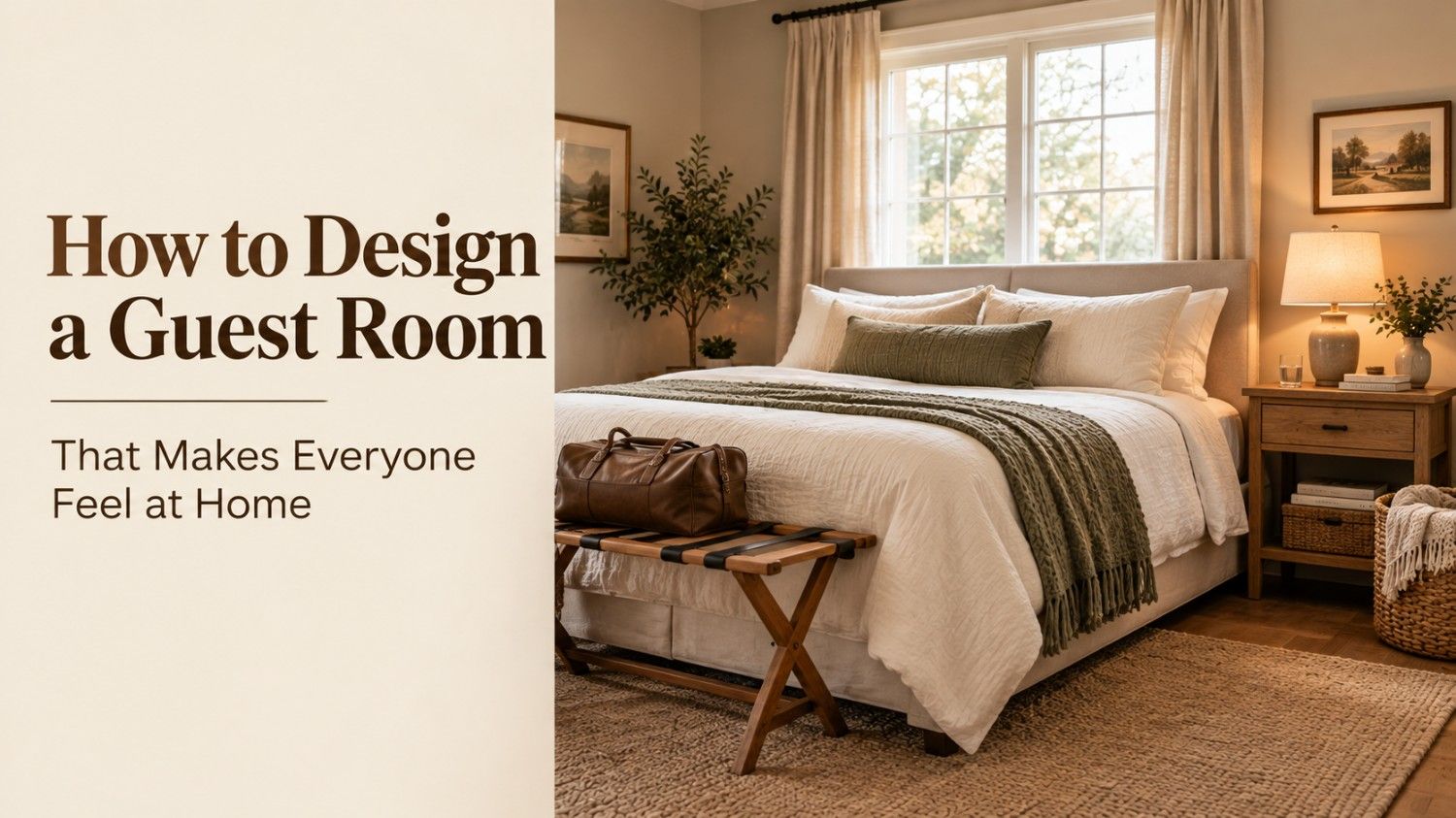
Designing a guest room can feel deceptively stressful. You want the space to look curated and welcoming, yet it often sits empty for weeks or doubles as a home office, craft space, or temporary storage zone. In the rush to prepare for visitors, it is easy to spend money on decorative pillows, wall art, or matching accessories while overlooking what guests actually need to feel comfortable.
A truly great guest bedroom is not about copying a five-star luxury hotel suite. It is about anticipating everyday human needs: a comfortable mattress, a place to set a suitcase without crouching on the floor, bedside lighting that does not require getting out of bed, and an obvious place to plug in a phone charger. When these fundamentals are in place, even a modest, budget-friendly spare room feels restful, intuitive, and genuinely welcoming.
Start with the Bed: Comfort Over Perfection
The bed is the functional center of the room. A guest who sleeps poorly will not remember how attractive the gallery wall looked. You do not need to buy an expensive new mattress to make a guest bed comfortable; strategic layering can dramatically improve existing bedding.
- Check the mattress foundation: If the mattress is slightly firm or older, a 2- to 3-inch memory foam or down-alternative mattress topper can instantly soften pressure points.
- Provide two pillow densities: Everyone sleeps differently. Offer at least four pillows on a queen or full bed—two medium-firm and two soft. This simple adjustment prevents guests from waking up with neck discomfort.
- Use breathable cotton sheets: Crisp 200- to 400-thread-count percale or soft washed cotton sheets breathe well, wash easily, and feel fresh across all seasons.
- Layer blankets for individual temperature control: Do not rely solely on one heavy comforter. Use a light duvet or quilt, paired with a folded knit or fleece throw blanket at the foot of the bed so guests can adjust warmth during the night without asking.
Clear Surface and Luggage Space: The Overlooked Essential
The single most common complaint from overnight houseguests is having nowhere to place personal belongings. When dressers and closet shelves are filled with the host's seasonal storage, visitors are forced to live out of an open suitcase balanced precariously on the carpet.
Creating functional space does not require clearing out the entire room:
- A folding luggage rack or bench: A simple folding luggage stand, wooden bench, or sturdy low shelf keeps suitcases off the floor and prevents back strain.
- Clear bedside tables: Keep nightstands largely uncluttered. A guest needs surface room for their water glass, phone, glasses, and a book. Resist the urge to fill the tabletop with decorative vases or trinkets.
- Six to eight empty hangers: Even if your guest closet holds storage bins, clear a small 12-inch section of closet rail and provide matching sturdy hangers for jackets, dresses, or shirts.
- A small wastebasket: Always place an empty, lined trash can in the room. Guests should never have to search the hallway or kitchen to dispose of tissues or packaging.
If you are working with a compact spare bedroom, our guide on how to make a small room look bigger without spending a fortune offers practical layout advice to maximize floor space.
Bedside Convenience: Lighting and Power
When someone is staying in an unfamiliar house, finding light switches in the dark is frustrating. Bedside convenience is one of the highest-impact upgrades you can make to a guest room.
- Bedside lamps with accessible switches: Ensure there is a lamp within arm's reach of the pillows. Touch-activated lamps or lamps with cord rocker switches are especially user-friendly. For more tips on warm, layered illumination, read our complete home lighting guide.
- Visible charging cords or power strips: Do not make guests crawl behind a heavy headboard to hunt for an electrical outlet. Place a desktop power strip with standard outlets and USB ports directly on or next to the nightstand.
- The Wi-Fi card: Print or neatly write your Wi-Fi network name and password on a small framed card placed on the nightstand or dresser. This saves guests from having to ask after you have gone to bed.
Privacy and Environmental Comfort
Sleeping away from home often disrupts natural sleep rhythms. Light and temperature are the two biggest factors influencing guest rest.
Window Treatments for Genuine Darkness
Sheer curtains look airy, but they allow morning sunlight and streetlights to wake your guests at dawn. Hang blackout curtain panels or install an affordable room-darkening roller blind behind decorative drapery. Ensuring the room can be made pitch-black gives your visitors the option of sleeping in.
Sound and Air Circulation
A quiet oscillating fan or ceiling fan accomplishes two things: it prevents a closed bedroom from feeling stuffy, and it provides soothing white noise that buffers household morning routines, kitchen noises, or pets.
The Thoughtful Essentials Station
Travel inevitably involves forgotten toiletries. Assembling a small basket in the bedroom or adjacent bathroom eliminates awkwardness for your guests.
Guest Hospitality Basket Ideas:
- Travel-size toothpaste and two sealed spare toothbrushes
- Gentle body wash, shampoo, and conditioner
- A carafe with a drinking glass
- Two plush bath towels, hand towels, and washcloths neatly folded
- A hair dryer stored in a clearly marked drawer or basket
- A pack of tissues and basic travel pain relief
How to Handle Multipurpose Rooms (Office / Guest Room)
Most homes do not have a dedicated room that sits idle 340 days a year. If your guest room doubles as a home office, you can easily transition it between functions:
- Screen off work equipment: Use a simple folding privacy screen or decorative room divider to block visual clutter from monitors and office paperwork while guests are staying.
- Use a daybed or convertible sofa with a mattress topper: If you use a pull-out sofa or daybed, always top it with a plush foam mattress topper before putting on sheets. It bridges gaps and softens rigid frame sections.
- Clear personal paperwork: Store sensitive documents and daily clutter into closed storage bins or drawers so the room feels peaceful rather than like an active workplace.
Pre-Arrival Guest Room Checklist
Run through this quick 10-minute check the day before your visitors arrive:
- [ ] Freshly wash and put on bed sheets and pillowcases.
- [ ] Test bedside lamp bulbs and verify the power strip is plugged in.
- [ ] Set out two fresh bath towels and a hand towel.
- [ ] Open the window for 20 minutes to air out the room, then set the thermostat to a comfortable resting temperature (around 68°F / 20°C).
- [ ] Place fresh drinking water and the Wi-Fi card on the nightstand.
- [ ] Empty the trash can and clear surface space on the dresser or luggage rack.
Frequently Asked Questions
What size bed is best for a guest room?
A queen-size bed is the most versatile option because it comfortably accommodates couples and adult solo travelers. If room dimensions are under 10x10 feet, a full-size (double) bed or a well-constructed daybed with a trundle offers better floor clearance while remaining comfortable.
How can I make an uncomfortable pull-out couch feel better?
Add a 2- to 3-inch high-density memory foam topper over the pull-out mattress, cover it with a quilted mattress pad, and use standard fitted sheets. This conceals the bar and fold mechanisms common in convertible sofa frames.
Should I provide scented candles or room spray in a guest room?
It is generally best to avoid strong fragrances. Many guests are sensitive or allergic to artificial scents, diffusers, or scented linen sprays. Stick to freshly laundered, unscented linens and a well-ventilated, clean room.
How many pillows should be on a guest bed?
Four standard pillows are ideal for a queen or king bed: two firm or medium-firm options and two softer, down or down-alternative options. This allows guests to choose the thickness that matches their preferred sleep position.