When a kitchen has little to no counter space, the instinct is usually to declutter harder but that only gets you so far. The real fix isn't fitting less onto the counter. It's stopping the counter from being the only storage surface in the room in the first place.
Every tip below works by moving function off the counter entirely onto walls, into cabinets, above appliances, or into spaces you're probably not using yet.
1. Start With a 3-Day Audit, Not a Deep Clean
Before organizing anything, spend three days just noticing what actually lands on your counter and why. Most counters aren't cluttered with random stuff they're cluttered with a handful of repeat offenders (the coffee maker, a fruit bowl, mail, a cutting board). Once you know what's actually competing for space, you can solve for those specific items instead of guessing.
2. Claim the Wall Above the Backsplash
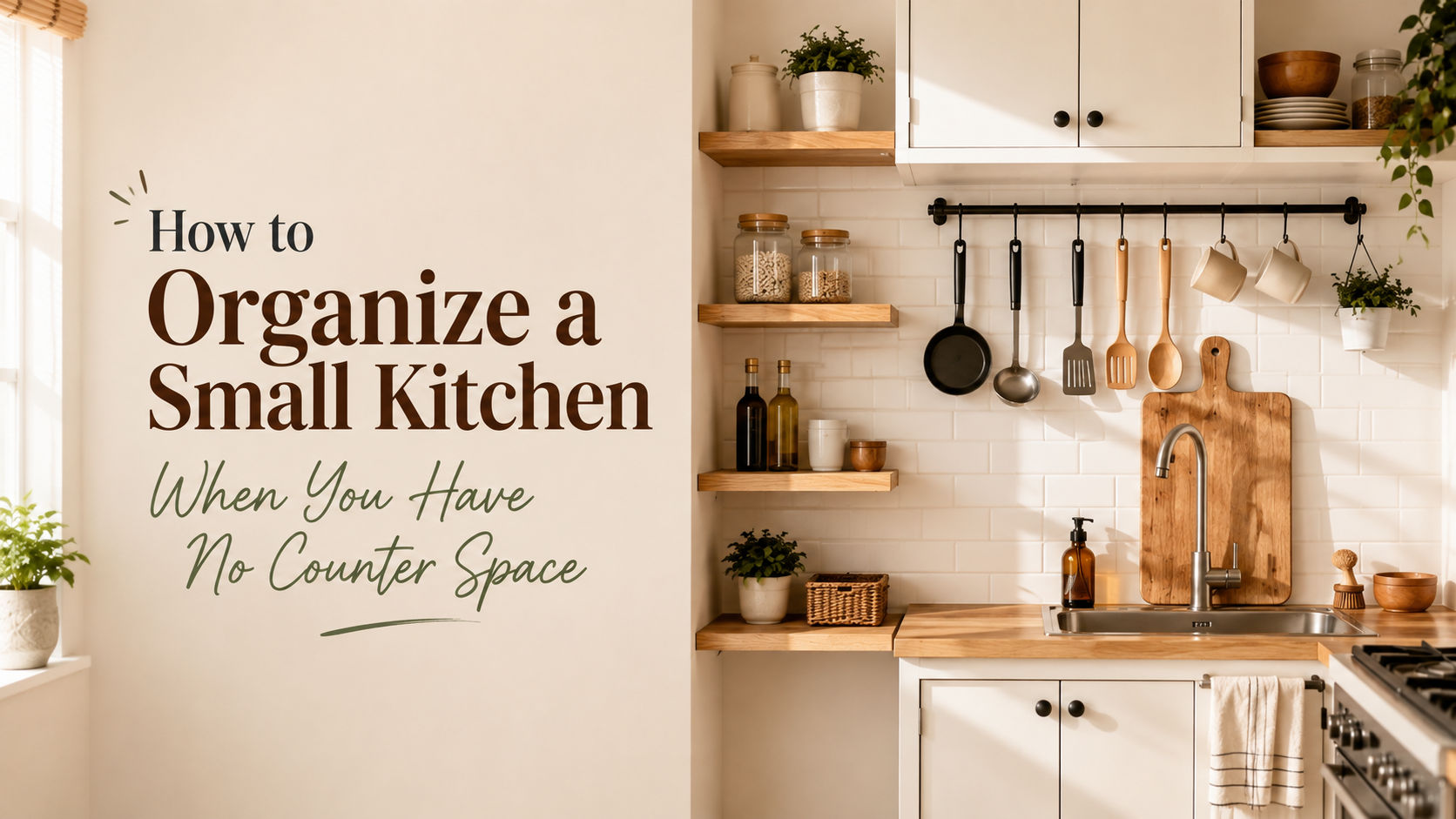
The strip of wall between your counter and your upper cabinets is almost always empty and it's prime real estate. A slim wall-mounted rail with S-hooks can hold utensils, mugs, and small pans. A magnetic strip holds knives and metal tools. Neither takes an inch of counter space, and both keep frequently-used items within arm's reach instead of buried in a drawer.
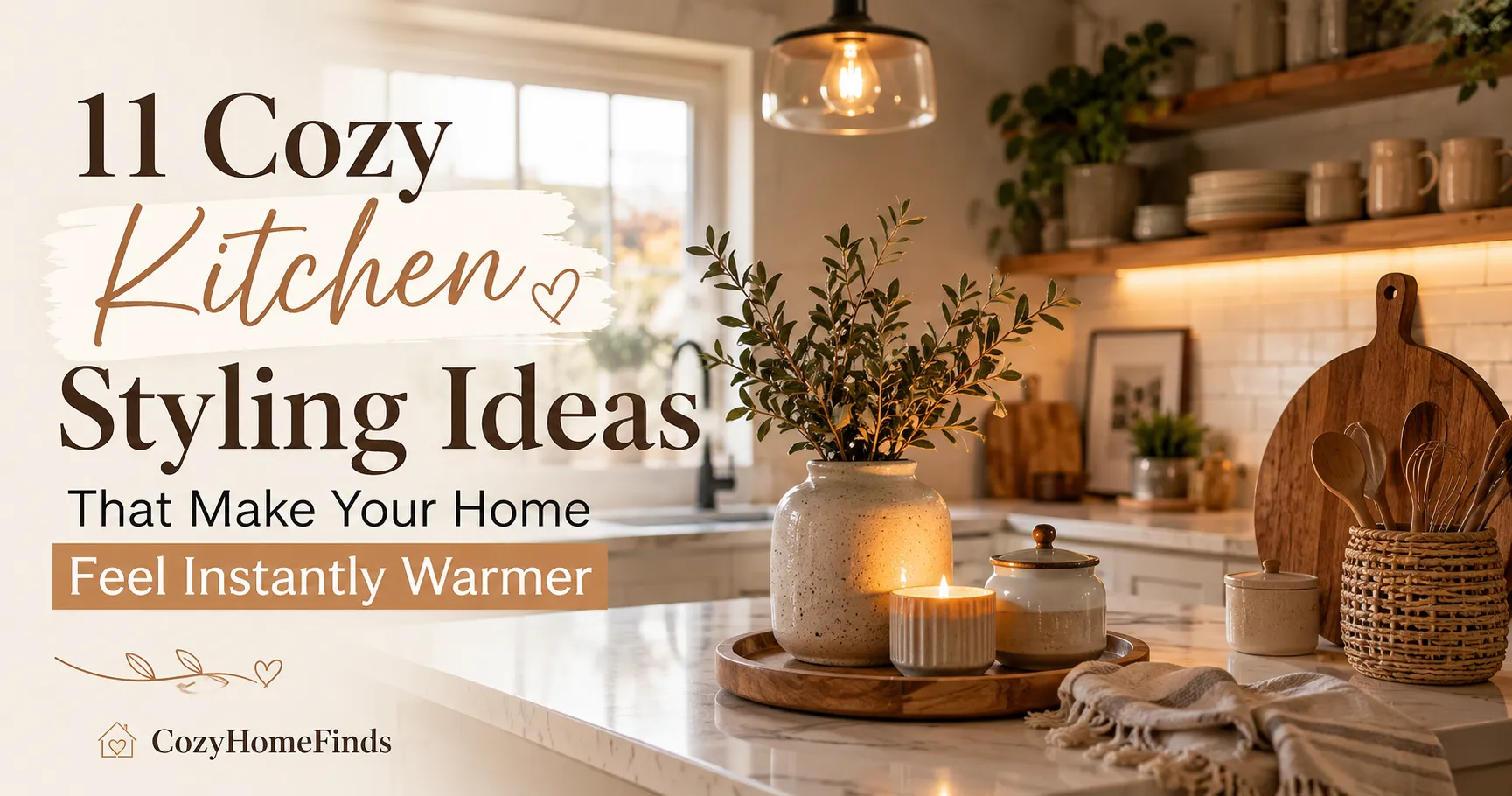
For more ways to style this exact zone without losing function, our 11 Cozy Kitchen Styling Ideas post has several small-kitchen-specific layouts worth borrowing from.
3. Turn Your Sink Into Extra Counter
An over-the-sink shelf or cutting board instantly creates a second workspace that didn't exist before and it's only in use when you need it. When you're not prepping food, it can hold a drying rack or dish soap, clearing that clutter off the real counter entirely.
4. Use Cabinet Doors as Storage, Not Just Doors
The inside of a cabinet door is wasted space in most kitchens. Slim over-the-door racks or adhesive hooks can hold spice jars, cutting boards, lids, or cleaning supplies all things that would otherwise sit out because there's "nowhere else to put them."
5. Get Lids Out of the Cabinet Entirely
Pot and pan lids are one of the most common reasons people give up on cabinet organization they don't stack, so people leave them wherever. A wall- or cabinet-door-mounted lid rack solves this permanently, and it frees up enough cabinet space that other counter clutter finally has somewhere to go.
6. Go Vertical Inside Cabinets, Not Just on Walls
Most cabinets are organized for depth, not height which wastes the top third of the space. A simple set of stackable risers or shelf inserts lets you use that dead vertical space for a second layer of plates, cans, or containers, effectively doubling a cabinet's storage without adding furniture.
7. Store Appliances You Use Weekly, Not Daily, Elsewhere
Not every appliance earns permanent counter space. If something gets used a few times a week rather than daily a stand mixer, a waffle iron, a blender it belongs in a cabinet or on a pull-out shelf, not sitting out "for convenience." Reserve counter real estate only for genuine daily-use items.
8. Use a Rolling Cart as Flexible Counter Space
A slim rolling cart gives you counter-height workspace that isn't permanently attached to the room roll it out when you're prepping food, tuck it into a corner or pantry when you're not. It solves the "I need more counter, but I don't have wall space for more counter" problem that fixed shelving can't.
9. Corral What Has to Stay Out
A few items a knife block, a fruit bowl, daily dishware often do need to live on the counter. The fix isn't removing them, it's containing them. Grouping loose items onto a single tray keeps the counter visually calm and makes it read as "styled" rather than "cluttered," even with the same number of objects on it.
10. Declutter the Room, Not Just the Counter
A counter looks cluttered faster in a kitchen that feels small overall. The same space-opening principles that apply to any small room clearing sightlines, using consistent colors, keeping surfaces mostly empty apply just as much to kitchens. If you haven't already, our guide on how to make a small room look bigger without spending a fortune covers the underlying principles that make this kind of organizing actually stick.
Most of the tools mentioned above wall rails, over-the-sink shelves, lid racks, stackable risers are inexpensive enough to test one or two at a time rather than overhauling the whole kitchen at once. If you're starting from scratch, our 5 Essential Economy Home Decor Finds on Amazon roundup is a good place to see what a few of these budget-friendly picks actually look like.
Frequently Asked Questions
How do I organize a kitchen with literally zero counter space?
Focus on three zones instead of the counter: the wall between counter and cabinets, the inside of cabinet doors, and the space above your sink. Between a wall rail, an over-the-sink shelf, and cabinet-door storage, most kitchens can recover the equivalent of several feet of "usable surface" without touching the actual counter.
What's the single best fix for a tiny kitchen with no storage?
A wall-mounted rail or magnetic strip in the empty space between your counter and upper cabinets. It's inexpensive, takes minutes to install, and immediately removes several daily-use items from counter duty.
Should I get rid of small kitchen appliances to save space?
Not necessarily just be selective about which ones earn permanent counter space. Reserve the counter for appliances you use daily; anything used a few times a week is usually better stored in a cabinet or on a rolling cart and pulled out only when needed.
How can I create more counter space without renovating?
An over-the-sink shelf or cutting board and a slim rolling cart are the two easiest ways to add functional workspace without any construction both create usable surface area that wasn't there before, and both can be removed or moved when not in use.